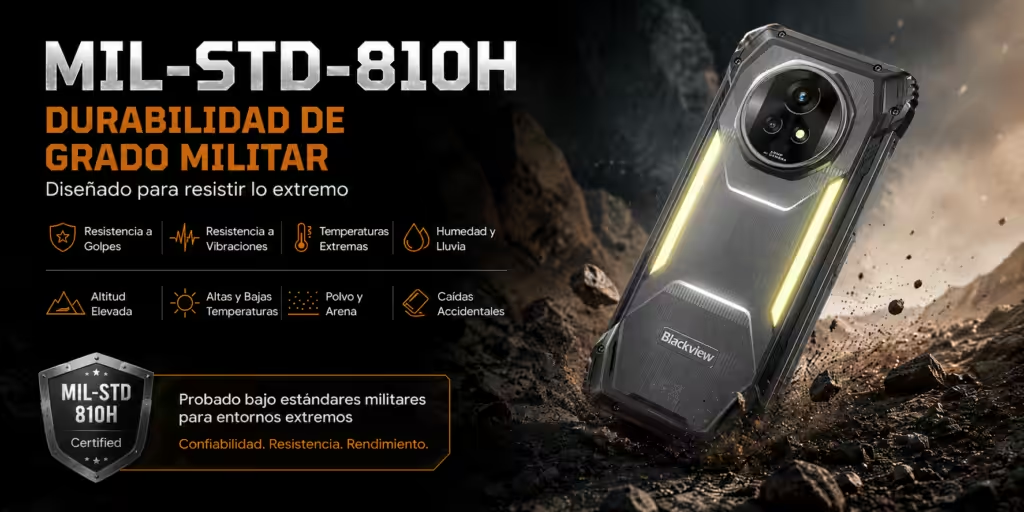
If you are looking for a rugged mobile, You've probably come across terms like IP68, IP69K or MIL-STD-810H.
On paper, they all seem to say the same thing: that the smartphone is durable.
But it's not exactly like that.
One certification might indicate that the phone is protected against dust and water immersion. Another assesses its resistance to pressurized water jets. And yet another relates to much broader tests, such as shocks, vibrations, temperatures, or specific environmental conditions.
Therefore, if you need a smartphone for work in construction, maintenance, logistics, agriculture, industry, or are simply looking for a phone prepared for more demanding use, it's worth understanding What is the difference between IP68, IP69K and MIL-STD-810H?.
And, above all, what do they really mean when they appear together in a Blackview rugged mobile phone.
What does IP certification mean for a mobile phone?
IP means Ingress Protection, or degree of protection against the entry of external elements.
The system is used to indicate the extent to which a casing protects internal components from elements such as dust and water.
You will usually find two digits after the letters IP.
For example:
IP68
The first number refers to protection against solid particles.
The second one indicates protection against liquids.
Therefore, IP68 is not a trademark created by manufacturers, but a standardized classification system associated with the IEC 60529 standard.
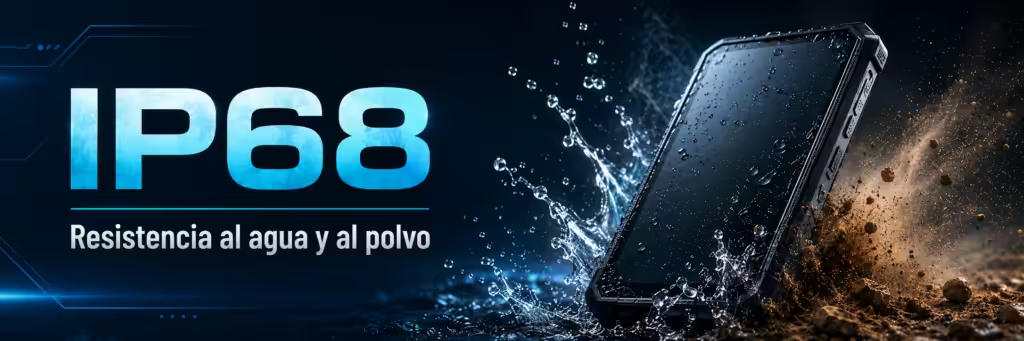
What does IP68 mean on a mobile phone?
In a classification IP68:
6 = maximum protection against dust ingress.
8 = protection against immersion in water under certain test conditions.
Here's an important detail.
That a phone is IP68 This does not mean that any IP68 mobile phone can be submerged to exactly the same depth and for the same amount of time.. The conditions corresponding to level 8 may depend on the specifications established for the product.
For example, Blackview currently indicates in the specifications of some of its IP68 terminals that they can withstand immersion in fresh water up to approximately one meter for a maximum of 30 minutes, provided that the device's guards and seals are properly closed.
What is IP68 used for in real life?
Imagine situations like:
working in a dusty environment;
that the mobile phone accidentally falls into water;
use it while it's raining;
working outdoors;
having the phone near mud, dirt or moisture;
do outdoor activities.
For these types of scenarios, IP68 provides much greater protection than a conventional smartphone without a similar rating.
But that doesn't mean the phone is indestructible either.
IP68 doesn't mean you can do just anything with your phone underwater
This is one of the most common mistakes.
An IP68-rated mobile phone may have high water resistance, but This should not be interpreted as an invitation to use it regularly while submerged..
Special care must be taken with salt water.
Blackview expressly recommends avoiding deliberate exposure to seawater, strong currents, waterfalls, or similar situations, and reminds users that resistance conditions primarily refer to freshwater and controlled conditions.
It should also be noted that gaskets, covers and protective parts may deteriorate with use.
Therefore, a good starting point is simple:
Water resistance should serve as protection against accidents and harsh environments, not as an excuse to subject the phone to unnecessary testing.
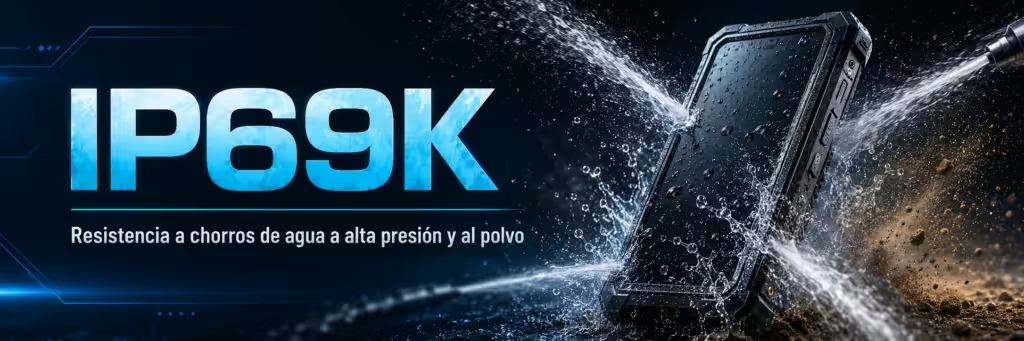
What does IP69K mean?
Here begins one of the most interesting differences.
Many people think that:
IP69K = IP68, but better.
Not quite.
IP68 and IP69K evaluate different water-related situations.
While IP68 is primarily associated with resistance to immersion, IP69K is related to protection against jets of water at high pressure and temperature.
The first number is again 6, which indicates a high level of protection against dust.
The 9K level corresponds to a much more demanding test against water projected directly against the device.
That's why it's common to find IP69K in equipment designed for industrial environments, machinery, vehicles, tools and, increasingly, professional rugged smartphones.
IP68 vs IP69K: Which is better?
Actually, the correct question would be:
What do you need to protect the device against?
When it comes to immersion, IP68 is especially relevant.
When it comes to high-pressure water jets, IP69K offers a different kind of protection.
That's why certain rugged mobile phones incorporate IP68 + IP69K at the same time.
They are not necessarily redundant certifications.
They are complementary.
A phone designed to work on a construction site, a farm, a workshop or certain industrial facilities may encounter water and mud as well as dust, rain or cleaning processes.
It is precisely in these types of scenarios where it makes sense to have both protections.
So, what is MIL-STD-810H?
Here we change completely to a different terrain.
MIL-STD-810H is not another waterproofing classification.
This is a standard developed for the United States Department of Defense called Environmental Engineering Considerations and Laboratory Tests.
The document brings together methodologies to assess how different environmental factors can affect materials and equipment during their useful life.
Depending on the tests selected, aspects related to the following can be evaluated:
impacts and blows;
vibrations;
high and low temperatures;
sudden changes in temperature;
humidity;
altitude or low pressure;
rain;
sand and dust;
different environmental and mechanical conditions.
And here's another important point to consider when buying a rugged mobile phone:
MIL-STD-810H does not automatically mean that a product has passed absolutely all existing tests within the standard.
The standard itself includes various methods and procedures that must be adapted to the product and the environments being simulated. In fact, the official documentation states that MIL-STD-810H is not a universal design specification for all equipment, but rather a framework for developing realistic environmental tests.
Therefore, it is more accurate to say that a device has been Tested in accordance with certain methods of MIL-STD-810H that interpreting those initials as a guarantee of indestructibility.
IP68 vs IP69K vs MIL-STD-810H: Main Differences
Feature
IP68
IP69K
MIL-STD-810H
Dust protection
Yeah
Yeah
It depends on the tests performed
Water immersion
Yeah
That is not their main objective
That is not its primary function
High-pressure water jets
That is not their main objective
Yeah
That is not its primary function
Bumps and falls
No
No
You can evaluate them
Vibrations
No
No
You can evaluate them
Extreme temperatures
No
No
You can evaluate them
Humidity and environmental conditions
Limited to the IP system
Limited to the IP system
You can look at them
Main objective
Powder + immersion
Powder + pressurized water
Environmental and mechanical resistance
This explains why a good ruggedized mobile phone can incorporate all three features:
IP68 + IP69K + MIL-STD-810H.
Each one covers different needs.
What does it mean for a mobile phone to have IP68, IP69K and MIL-STD-810H?
When all three appear together, we are looking at a device designed with a very different philosophy than that of a conventional smartphone.
It's not just about having a large screen, good cameras, or a fast processor.
It is also intended that they can perform better in environments where risks exist, such as: dust; humidity; mud; rain; accidental blows; vibrations; I work outdoors; environmental changes; intensive use.
This is precisely where the Blackview rugged mobile phones They have one of their main differences compared to conventional smartphones.
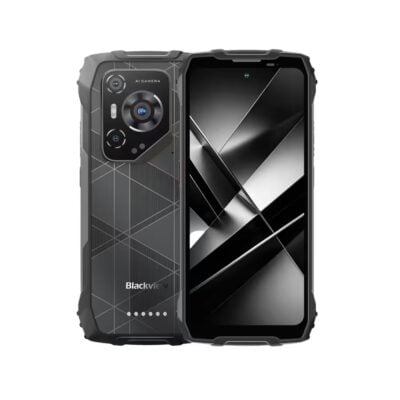
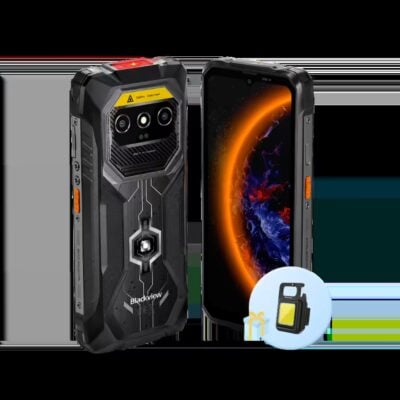
Currently, models like the Blackview XPLORE 2, XPLORE 1 Pro, BL7000 Pro 5G either FORT 1 They incorporate IP68, IP69K and MIL-STD-810H within their resistance specifications.
Who really needs an IP68, IP69K and MIL-STD-810H mobile phone?
You don't need to work on a military mission or climb a mountain every weekend to benefit from a rugged smartphone.
This type of protection can make a lot of sense for professionals.
Construction and works
Dust, cement, tools, accidental bumps, rain and hard surfaces are part of everyday life.
In these situations, carrying a conventional smartphone without protection can be impractical.
A heavy-duty mobile construction It offers a casing specifically designed to withstand more demanding use.
Agriculture and outdoor work
Dirt, humidity, mud, temperature changes and long days away from a plug make resistance and autonomy especially important.
Blackview phones with high-capacity batteries are also often of interest here.
Industry and maintenance
Technicians, installers, and maintenance personnel may work near machinery, dust, tools, or surfaces where an accidental drop can be especially dangerous for a conventional smartphone.
In addition, certain ruggedized models incorporate additional tools that are especially useful for these sectors.
He Blackview XPLORE 1 Pro, For example, it combines IP68/IP69K/MIL-STD-810H with FLIR thermal camera, night vision and a 20,000 mAh battery, This makes it a proposal especially focused on professionals who are looking for more than just endurance.
Logistics and warehouses
Vibrations, constant movement, dust, and the risk of falling also make the rugged smartphone an interesting option.
Hiking, camping and outdoor activities
If you spend many hours away from home, durability can be combined with another key feature: autonomy.
He Blackview XPLORE 2, For example, it incorporates a 20,000 mAh battery along with IP68, IP69K and MIL-STD-810H ratings, as well as 5G connectivity and a built-in high-power flashlight
Is it better to buy a ruggedized phone than to use a durable case?
It depends on the use.
For the occasional drop, a good case can offer sufficient additional protection.
But a case does not automatically turn a conventional smartphone into an IP69K device or one tested to MIL-STD-810H.
The advantage of a rugged smartphone The resistance is part of the device's design itself.
The casing, gaskets, port protections, internal structure and materials have been designed with more demanding situations in mind.
That's why a rugged mobile phone makes especially sense when the risk is not exceptional, but part of your daily routine.
Is a mobile phone IP68, IP69K and MIL-STD-810H indestructible?
No.
And any serious explanation about ruggedized mobile phones should clearly state that.
Resistant does not mean indestructible.
Neither IP68 allows the device to be submerged indefinitely, nor does IP69K make the smartphone immune to any water jet, nor does MIL-STD-810H mean that it can survive any fall.
In fact, Blackview's own product information recommends not intentionally performing extreme tests, not exceeding the limits set by the manufacturer, and checking that covers and protectors are properly closed before exposing the device to water or dust.
The real advantage of these protections is something else:
reduce the risk of accidents and the usual conditions of a demanding environment ending up damaging your smartphone.
IP68, IP69K and MIL-STD-810H: Which one should you look for?
If you just want some peace of mind regarding water and dust, IP68 can cover many everyday situations.
If you work in much more demanding environments where there may be dirt, sprayed water or cleaning processes, IP69K adds another layer of protection.
And if the device is also going to be exposed to shocks, vibrations, or demanding environmental conditions, it must have been tested in accordance with MIL-STD-810H It is especially interesting.
Therefore, for professionals, adventurers, and users who truly need durability, one of the most complete configurations is:
IP68 + IP69K + MIL-STD-810H.
Precisely a common combination within the range of Blackview rugged smartphones. The current BlackviewPhones rugged mobile phone category includes several models with these specifications aimed at both professionals and outdoor users.
Frequently Asked Questions about IP68, IP69K and MIL-STD-810H
Which is better, IP68 or IP69K?
They don't protect against exactly the same situations. IP68 is specifically related to dust and water immersion, while IP69K assesses resistance to high-pressure, high-temperature water jets. That's why some rugged devices have both ratings.
Can an IP69K mobile phone also be submerged?
Not just because it's IP69K. Immersion resistance must be verified using the corresponding rating, such as IP68. That's why it's important to check all the device's certifications.
What does MIL-STD-810H mean on a mobile phone?
It's a US standard that contains methods for evaluating equipment under different environmental and mechanical conditions, such as impacts, vibrations, temperatures, humidity, and altitude. It doesn't automatically mean that a smartphone is indestructible or that it has passed all the tests included in the standard.
Does IP68 mean the phone is waterproof?
It is more correct to speak of water resistance. The protection works under specific conditions and can be affected by wear, damage, or poorly sealed joints.
Can an IP68 mobile phone be used at sea?
It is not recommended. Saltwater is more aggressive than freshwater, and Blackview recommends avoiding this type of exposure whenever possible.
Which Blackview model has IP68, IP69K and MIL-STD-810H certification?
Currently there are several models, including Blackview XPLORE 2, XPLORE 1 Pro, BL7000 Pro 5G and FORT 1.
What certification should a mobile phone have to work in construction?
For construction environments, I would recommend looking for at least a phone specifically designed as ruggedized, and especially considering the combination IP68 + IP69K + MIL-STD-810H testing, In addition to high battery life, good screen brightness, and features suitable for work